














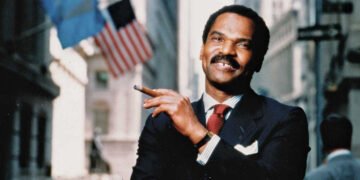






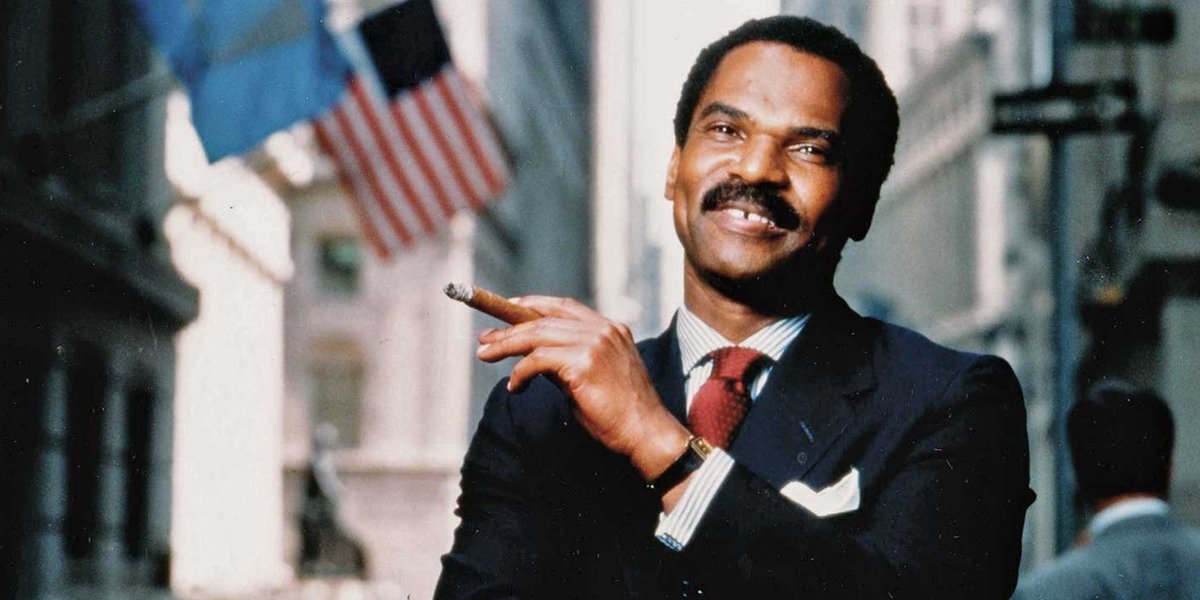
Before Silicon Valley billion-dollar unicorns, before corporate diversity efforts, and long before Wall Street even pretended to make room for Black excellence, Reginald F. Lewis carved out a place in history through brilliance, strategy, and relentless self-belief.
In 1987, Lewis acquired TLC Beatrice International Holdings, transforming it into the first Black-owned business in American history to surpass $1 billion in annual revenues. At a time when the idea of a Black man leading a global conglomerate was considered unthinkable, Lewis didn’t just break barriers — he dissolved them.
His story remains one of the most powerful, under-taught business triumphs in American history.
“Why Should White Guys Have All The Fun?”
Born in Baltimore in 1942, Lewis was raised in a working-class household that emphasized education and discipline. He excelled early — earning a scholarship to Virginia State University and later graduating from Harvard Law School, where he entered through a special summer program after impressing faculty with exceptional aptitude and drive.
Lewis began his career as a corporate lawyer, but his ambitions reached far beyond the legal world. In 1983, he purchased McCall Pattern Company — a struggling sewing-pattern business — and engineered a remarkable turnaround, growing revenues and increasing profits fivefold before selling it for a significant gain.
But Lewis wanted more. Much more.
His autobiography title — Why Should White Guys Have All the Fun? — wasn’t a question. It was a declaration.
Building TLC Beatrice — A Billion-Dollar Milestone
In 1987, Lewis orchestrated the $985 million leveraged buyout of TLC Beatrice, a global food, beverage, and grocery conglomerate operating in 31 countries, most of which were in Europe.
The deal was historic for many reasons:
-
It was the largest offshore leveraged buyout ever completed at the time.
-
Lewis negotiated the deal by outmaneuvering powerful firms that underestimated him.
-
Within a year, TLC Beatrice became the first Black-owned company in American history to generate over $1 billion in annual revenue.
Under his leadership, TLC Beatrice became a profitable powerhouse, placing Lewis among the wealthiest businessmen in the country.
His achievements weren’t symbolic — they were structural. They challenged entrenched assumptions about who could lead, negotiate, own, and shape the global economy.
Why Reginald F. Lewis Still Matters
More than three decades later, Lewis’s impact still reverberates — not because of the billion-dollar headline, but because of what it represented.
1. He expanded the imagination of Black possibility in business.
Lewis proved that Black entrepreneurs and executives didn’t have to think small or limit themselves to what the system offered.
2. He built generational wealth — and a blueprint.
Lewis understood the difference between income and ownership. His acquisitions demonstrated to Black entrepreneurs how to scale beyond small businesses into multinational operations.
3. He disrupted a closed, exclusive world.
Corporate America wasn’t built for Black participation, much less Black leadership. Lewis forced the door open — and left it open.
4. His story counters a narrative that’s still too rare.
Black business history is filled with innovators, financiers, and empire builders — but few get mainstream recognition. Lewis stands as proof that this legacy is real, powerful, and ongoing.
A Legacy That Outlives Him
Lewis passed away in 1993 at just 50 years old, but his influence continues through:
-
The Reginald F. Lewis Museum of Maryland African American History & Culture
-
The Reginald F. Lewis College of Business at Virginia State University
-
Countless entrepreneurs, investors, and CEOs who cite him as a formative inspiration
His story is a testament to what’s possible when brilliance meets opportunity — and when opportunity is taken rather than requested.
How You Can Share & Explore His Legacy
-
Read or recommend Why Should White Guys Have All the Fun?
-
Share Lewis’s story during Black History Month, business conferences, and entrepreneurship workshops
-
Support Black venture-capital firms, incubators, and business education programs
-
Teach younger generations about Black business leaders whose stories aren’t yet household names
Uptown Sunday celebrates Reginald F. Lewis not just for becoming the first Black man to build a billion-dollar company, but for proving that excellence needs no permission. His life reminds us that Black ambition has always been bigger than the limits set around it — and that breaking barriers isn’t the exception in our community, but the tradition.